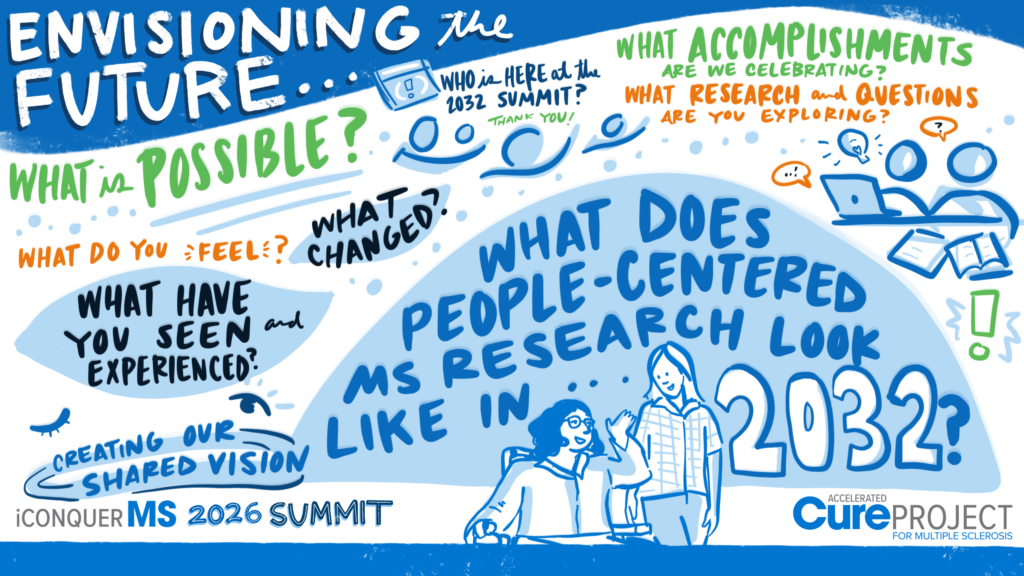
At the 2026 iConquerMS Summit, people affected by MS, researchers and other stakeholders examined what needs to change in MS research — and developed ideas for making that change possible.
What if someone living with MS could participate in a clinical study without traveling to a research center? What if researchers could better measure the fatigue, cognitive changes and other symptoms that affect everyday life? And what if people affected by MS had a clearer path for turning their own unanswered questions into funded research?
These were among the possibilities explored at the 2026 iConquerMS Summit, a two-day virtual gathering hosted by iConquerMS, the community-partnered research network of Accelerated Cure Project for MS (ACP).
The Summit brought together people living with MS, care partners, researchers, clinicians, advocates and other stakeholders around a central question: What could MS research look like in 2032, and what needs to change to get there?
Rather than beginning with existing programs or research priorities, participants were invited to imagine their ideal future, identify what’s standing in the way and develop creative solutions.
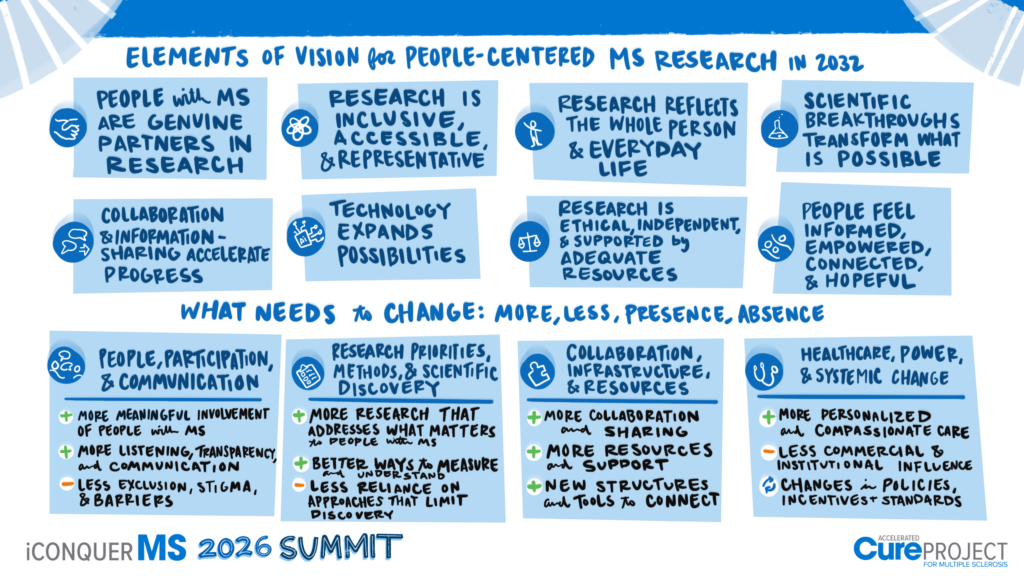
What needs to change in MS research?
Across breakout discussions, participants identified several recurring concerns about how research is conducted, who can participate and what scientists measure.
Measuring what matters in everyday life. Participants questioned whether commonly used measures of MS disability and progression, including the Expanded Disability Status Scale (EDSS), adequately reflect experiences such as fatigue, cognitive changes and the ability to manage daily activities. They called for research measures that better capture quality of life, alongside traditional clinical outcomes.
Making research more representative. Participants raised concerns about research study eligibility requirements that exclude older adults, people with other health conditions and others whose experiences may not fit narrowly defined study populations. They also identified transportation, mobility limitations, geography and internet access as barriers that can prevent people from participating.
Connecting research with real life. Several discussions focused on what happens after research is completed. Participants wanted findings communicated in accessible language, shared with the people who contributed to studies and translated into information that healthcare providers and people affected by MS can actually use.
Breaking down information barriers. Participants described the challenges of navigating disconnected healthcare systems and research institutions. They called for better communication among neurologists, primary care providers, other specialists and researchers, as well as more opportunities for people affected by MS to contribute their knowledge and experiences.
Scientific priorities also featured prominently. Participants expressed hope for treatments that repair damaged myelin, better tools for predicting progression, more personalized treatment decisions and greater understanding of aging with MS.
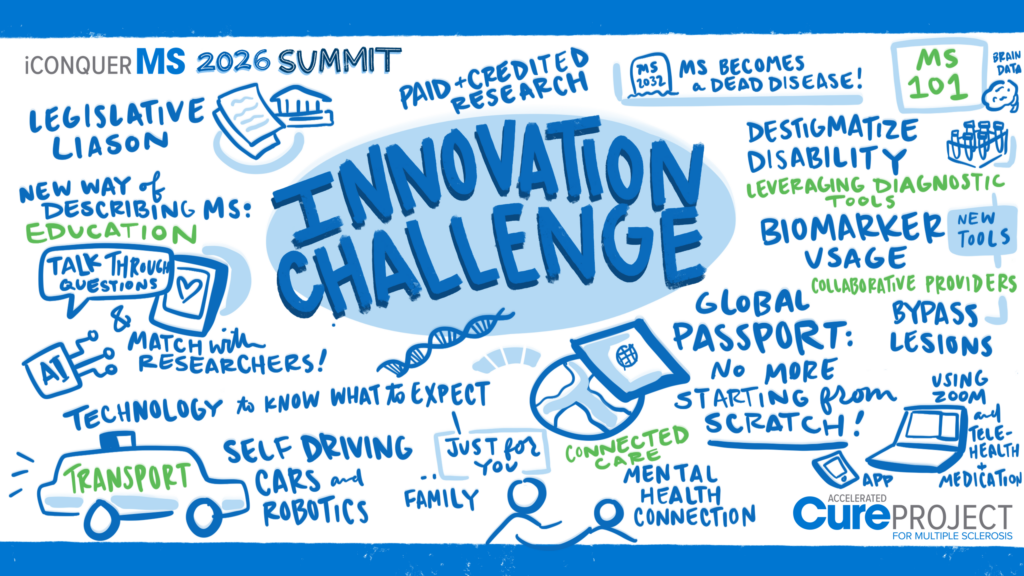
From challenges to creative solutions
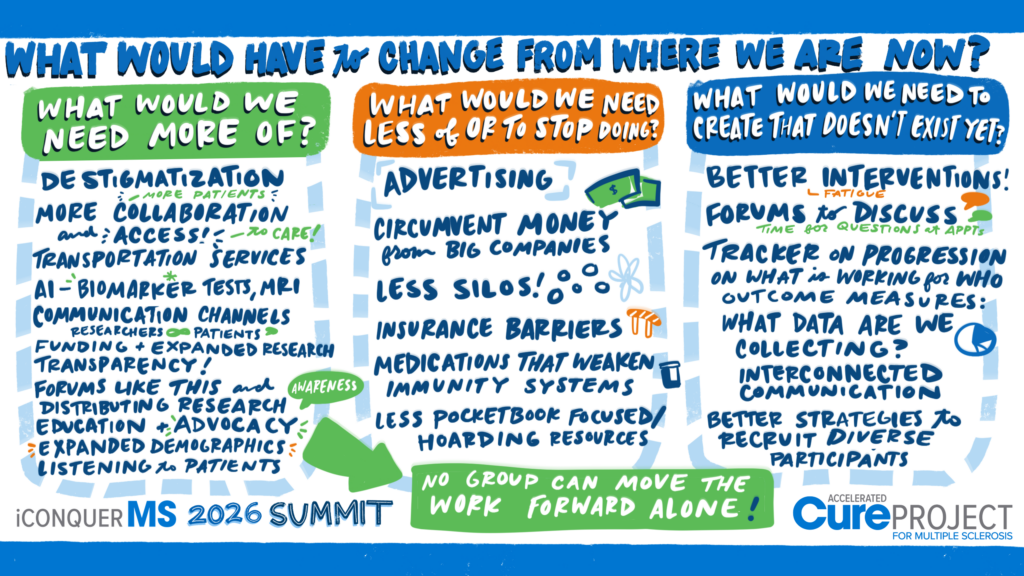
After identifying what needed to change, participants took part in an innovation challenge, brainstorming ideas that ranged from practical improvements to ambitious new approaches.
One proposal was a mobile MS research service — essentially a research bus that could travel to communities and bring study visits closer to participants. The idea addressed a recurring concern: research participation often requires people to travel to specialized centers, even when mobility, fatigue or distance makes that difficult.
Another idea was a research GPS, a tool that could help people identify studies for which they might qualify, understand what participation involves and learn what previous studies accomplished.
Participants also proposed a universal MS research passport: a secure, portable, participant-controlled record connecting medical history, research information and lived experiences across studies. Instead of repeatedly providing the same information, individuals could decide what data to share with researchers.
When this idea was explored in greater depth, participants raised important questions about privacy, data accuracy, consent and how information from different healthcare systems could be brought together. The discussion demonstrated that even promising ideas require careful attention to practical and ethical challenges.
Other proposals included wearable technologies that capture changes in daily function, tools to support more personalized treatment decisions and ways to make research participation part of everyday life rather than a series of burdensome appointments.
What happens next?
The Summit generated a wide range of ideas, from improvements to existing research practices to concepts that would require substantial new partnerships, technology or funding.
Not every proposal will become a project. But the discussions provide valuable insight into the priorities of people affected by MS and the researchers and other partners working alongside them.
The next challenge is determining which ideas to move forward, what resources and partnerships they will require, and how people affected by MS will help shape and lead their development.
The 2032 vision was ambitious. The conversations about getting there were often practical, sometimes challenging and grounded in experiences that conventional research processes may overlook.
And that may be one of the Summit’s most important contributions: identifying not only the scientific advances people hope to see, but also the changes needed in how research questions are chosen, studies are designed and findings are shared.
Graphics above created live during the Summit by Haley McDevitt.