Understanding MS
What it is, what it means, and where research is headed.

Overview
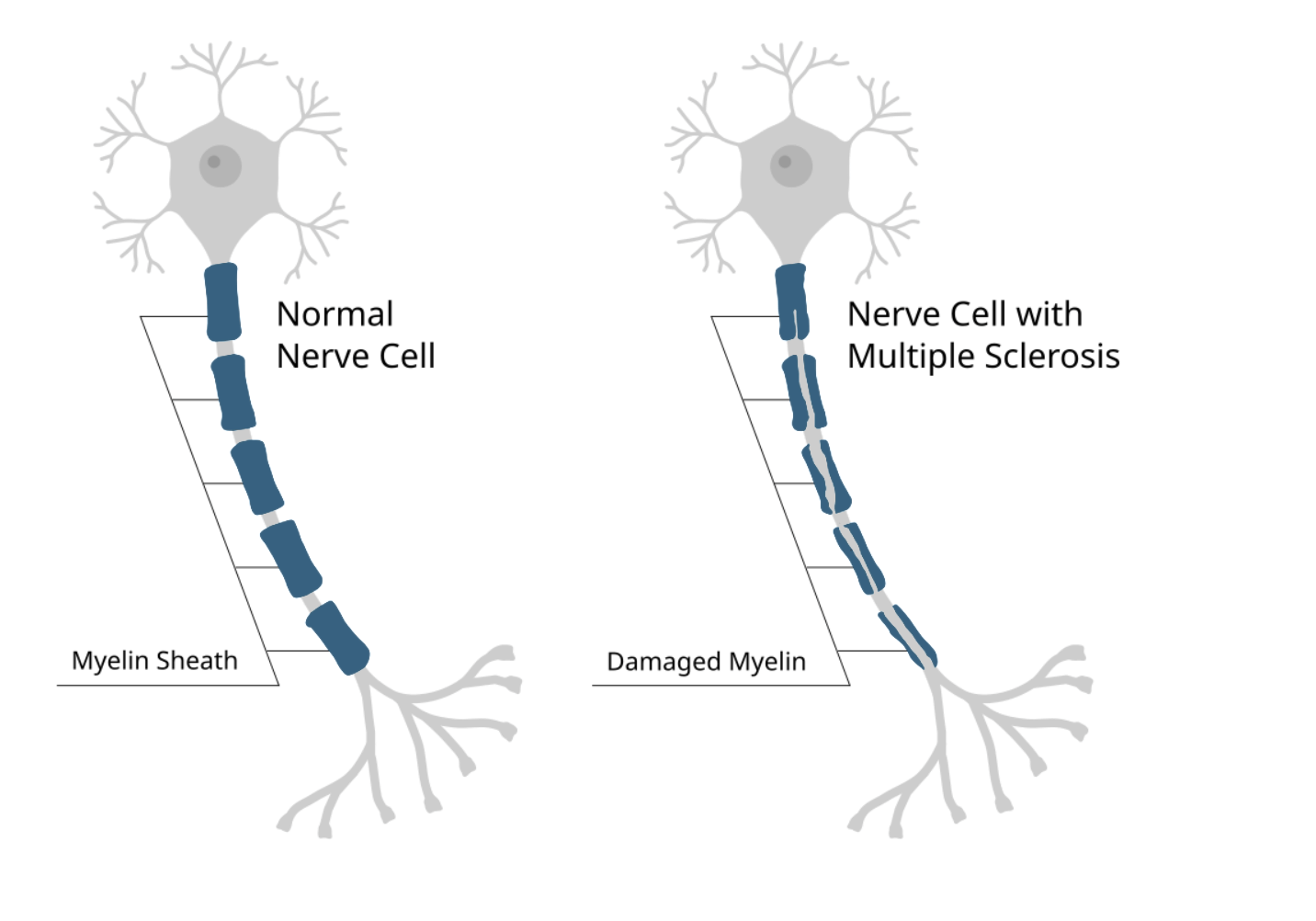
Multiple sclerosis is a chronic autoimmune condition in which the immune system attacks myelin, the protective covering of nerve fibers in the central nervous system. That disruption interferes with the signals the brain sends to the rest of the body — producing a wide range of symptoms that vary significantly from person to person.
No two people experience MS the same way. Symptoms can include fatigue, difficulty walking, numbness or tingling, muscle weakness, vision changes, and cognitive shifts. Some people have long periods of stability. Others experience more consistent progression. The course of the disease, and what it means for daily life, looks different for everyone.
Types of MS
MS has traditionally been described in subtypes — relapsing-remitting, secondary progressive, primary progressive, and others. These categories have helped guide diagnosis and treatment decisions for decades. Emerging research, including a major 2025 study published in Nature Medicine, is beginning to challenge whether these boundaries are as fixed as once thought, suggesting that MS may be better understood as a continuous process rather than distinct types. The science is still evolving, and that evolution is reason for optimism.
Diagnosis
There is no single test for MS. Neurologists typically use a combination of medical history, neurological examination, MRI scans, and other assessments to reach a diagnosis. Getting to a diagnosis can take time, and it can be a difficult process. If you are navigating that process, connecting with an MS specialist is one of the most important steps you can take.

Treatment
While there is no cure for MS yet, treatment options have expanded significantly in recent decades. Disease-modifying therapies can reduce the frequency and severity of relapses and slow progression for many people. Symptom management, rehabilitation, and lifestyle approaches also play an important role. Working with a healthcare team experienced in MS care is essential to finding the right approach for your specific situation.
A pivotal moment for MS research
MS research is moving faster than at any point in the disease’s history. Advances in artificial intelligence and machine learning are helping researchers analyze MRI data with greater precision, predict disease progression, identify new biomarkers, and personalize treatment approaches in ways that weren’t possible even a few years ago. Large-scale data initiatives are surfacing patterns across thousands of people that no single clinic could ever see alone.
This progress is already shaping how researchers understand and study MS. ACP works closely with the research community by providing access to one of the largest collections of MS biospecimens and research data in the field, spanning more than 25 years and 150+ studies.
Through iConquerMS, ACP also supports a research community of more than 10,000 people affected by MS who contribute to and help shape research over time. If and when you feel ready, we invite you to become part of this growing community.
Help shape the future of research
Share your experience, take part in studies, and help researchers focus on what matters most. Participate from home, on your own time, and choose how you want to get involved.





Help accelerate the research that moves us closer to a cure.
Your gift supports ACP's work connecting researchers with the people, biosamples, data and expertise needed to advance MS research.