
The hidden impact of infections on people living with MS
New research from ACP reveals how infections can disrupt daily life, even when hospitalization isn’t required.
When researchers study infections in people living with multiple sclerosis (MS), they often focus on how frequently infections occur, how severe they become, and whether they require hospitalization. But those measures often overlook the broader impact on daily life and quality of life.
New research from Accelerated Cure Project for MS (ACP), drawing on the experiences of nearly 700 members of its iConquerMS research network, highlights the substantial burden that traditional measures may miss.
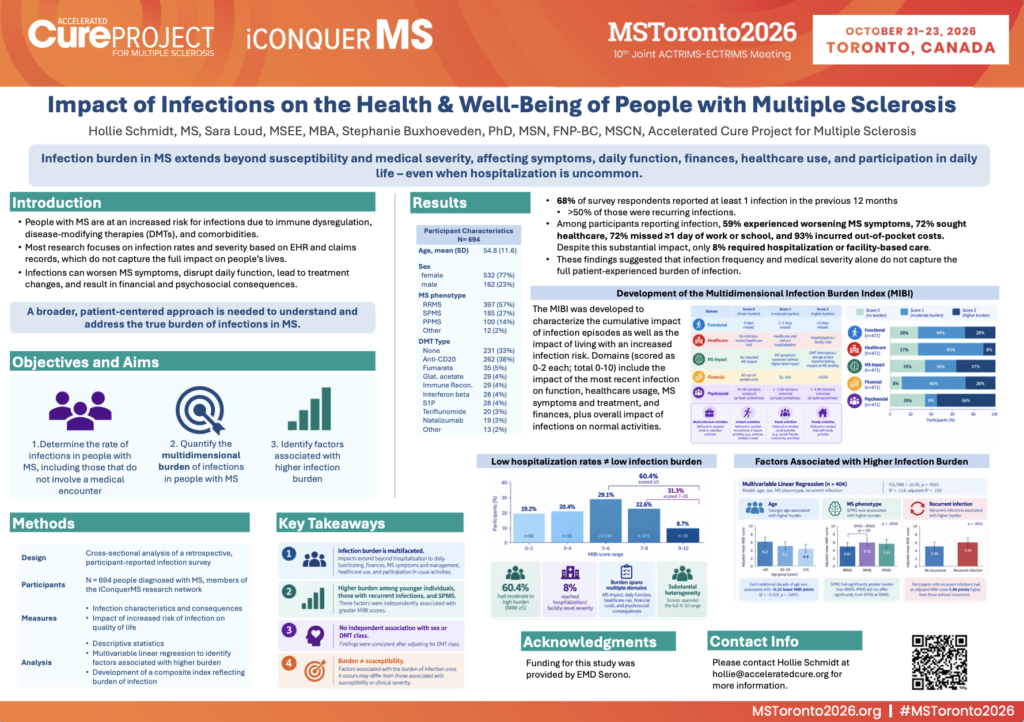
Among participants who reported an infection in the previous year, 59% experienced worsening MS symptoms, 72% missed at least one day of work or school, and 92% incurred out-of-pocket costs. Yet only 8% required hospitalization or facility-based care.
The impact extended beyond infections themselves: 65% of respondents reported limiting work, social, leisure, or family activities because of concerns about infection exposure. ACP researchers also found that younger age, secondary progressive MS, and recurrent infections were associated with greater overall infection burden.
The findings, presented last week at the 2026 joint ECTRIMS-ACTRIMS meeting in Toronto, highlight why understanding infection burden—not just frequency or severity—is essential to improving care and preserving quality of life for people with MS.
Looking beyond medical records
People living with MS may face an increased risk of infections because of changes in immune function, certain MS treatments, and other health conditions. Infections can also worsen existing MS symptoms, interfere with daily activities, and create additional financial and emotional burdens.
Much of what researchers know about infections in MS comes from medical records and insurance claims. These sources provide valuable information about diagnoses, treatments, and healthcare use, but they don’t necessarily reveal what happens outside the healthcare setting.
To better understand those experiences, the research team at ACP surveyed 694 iConquerMS members about infections they had experienced during the previous 12 months and how those infections affected their lives.
Overall, 68% reported at least one infection, and more than half of those participants reported recurring infections.
Their responses revealed a broader picture of infection burden, one that includes not only medical consequences but also disruptions to everyday life.
Shaped by the MS community
Before the main study began, iConquerMS members helped shape its direction through a preliminary planning survey. Their input identified important topics to explore, including infection prevention and the effects of infections on MS symptoms and quality of life. Members also helped the ACP team determine how to ask questions that would capture these experiences.
ACP’s Research Inclusion, Diversity and Equity (RIDE) Council, which works to make MS research more inclusive and representative, also helped inform the study by sharing perspectives on how infections affect the communities its members represent.
Together, these contributions helped ensure that the research examined concerns identified by people living with MS, not just outcomes typically captured in medical records.
A more complete way to measure infection burden
To better capture these experiences, ACP developed the Multidimensional Infection Burden Index (MIBI), a tool designed to measure the broader effects of infections.
Rather than relying primarily on infection frequency or medical severity, the index considers five dimensions:
- Changes in daily functioning
- Healthcare use
- Effects on MS symptoms and treatment
- Financial consequences
- Disruptions to normal activities
By bringing these factors together, the index offers a framework for examining the cumulative impact of infections, including consequences that conventional measures may overlook.
Researchers at ACP also examined factors associated with greater infection burden. Their analysis found that younger age, MS type, and recurrent infections were associated with differences in overall burden.
The association with younger age is particularly noteworthy. While discussions of infection risk often emphasize serious medical complications among older adults, these findings suggest that the broader consequences of infections deserve attention across the MS population.
“One of the challenges in MS research is making sure we’re measuring the things that matter most to people living with MS,” said ACP Chief Scientific Officer Stephanie Buxhoeveden. “This study is an example of what becomes possible when we ask people directly about their experiences. We’re not just collecting information that traditional medical records might miss. We’re using those experiences to help shape how we study the impact of infections in the first place.”
Why community participation matters

The study illustrates the value of asking people living with MS directly about their experiences.
Medical records can document an infection and the treatment someone receives. But they may not capture the days spent struggling with worsened symptoms, the activities missed, or the financial costs of managing an illness.
By sharing these experiences through iConquerMS, participants helped ACP identify impacts that might otherwise remain invisible.
Their contributions are helping build a more complete understanding of how infections affect people living with MS, laying the groundwork for research that looks beyond medical outcomes to the disruptions infections can cause in everyday life.
What’s next?
The findings presented at ECTRIMS-ACTRIMS are just the beginning. ACP is continuing to analyze the survey results, including what participants shared about vaccination, challenges in recognizing and managing infections, and antibiotic use.
The team is also preparing a manuscript for submission to a scientific journal, where independent experts will review the research before it can be published. Additional findings may be shared through future presentations and publications.
ACP will keep the iConquerMS community informed as the research progresses, sharing what we’re learning from the experiences members have contributed.
The study was funded by EMD Serono.